Intelligent Job Scheduling for HPC Systems

A Statistical Evaluation of Deep Reinforcement Learning Approaches

Over the past three decades, supercomputers and their workloads have become increasingly complex. Scheduling systems have evolved from traditional heuristics to Deep Reinforcement Learning (DRL) approaches that adapt policies to specific workloads. Though there are several studies that develop various DRL models, no clear consensus exists on the optimal algorithm. This project trains and evaluates representative algorithms from three prominent DRL families: DQN, PPO, and A2C. Statistical testing (Friedman, Nemenyi, Wilcoxon-based confidence intervals) determines whether significant performance differences exist across five industry-standard metrics.

Institution: University of the Western Cape
Programme: BSc (Hons) Computer Science
Year: 2026

Research Deliverables

Papers, presentations, and recordings for each submission milestone

Submission 1

Available

April 2026

Initial submission presenting problem statement, literature review findings, proposed methodology, and current progress.

Submission 2

In Progress

Expected: May 2026

Progress update with DRL training infrastructure implementation, initial training results, and preliminary statistical analysis.

Submission 3

To Be Added

Expected: June 2026

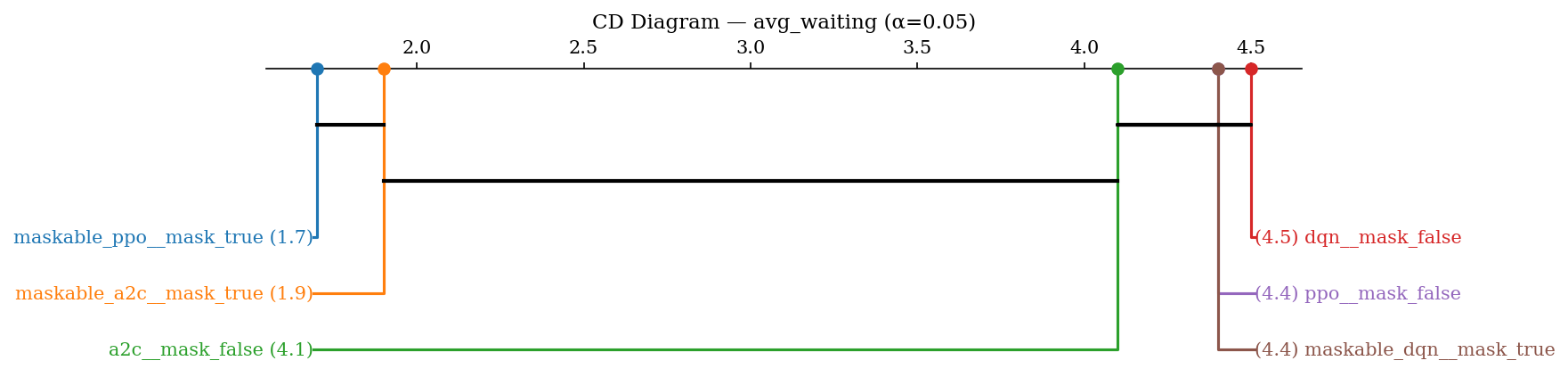
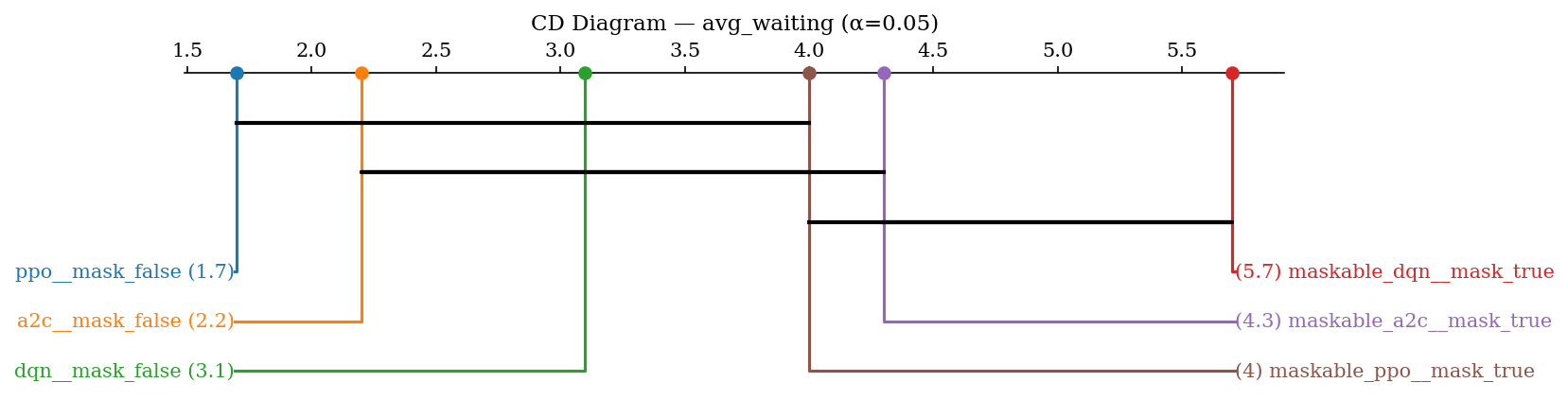
Complete statistical analysis results, Critical Difference diagrams, and comprehensive evaluation of all DRL algorithms.

Lock icon Report (PDF) Lock icon Slides (PDF) Lock icon Recording

Final Submission

To Be Added

Expected: July 2026

Complete Honours paper with full results, discussion, conclusions, and future work recommendations.

Lock icon Paper (PDF) Lock icon Slides (PDF) Lock icon Recording

The Team

Researchers and supervisors contributing to this project

Graduate Icon

Justin M. Cheney

Honours Student

BSc Computer Science
Department of Computer Science
University of the Western Cape

Graduate Icon

Prof. Clement Nyirenda

Supervisor

PhD Computational Intelligence and Systems Science
Department of Computer Science
University of the Western Cape